
 EN
EN

News & Event
-
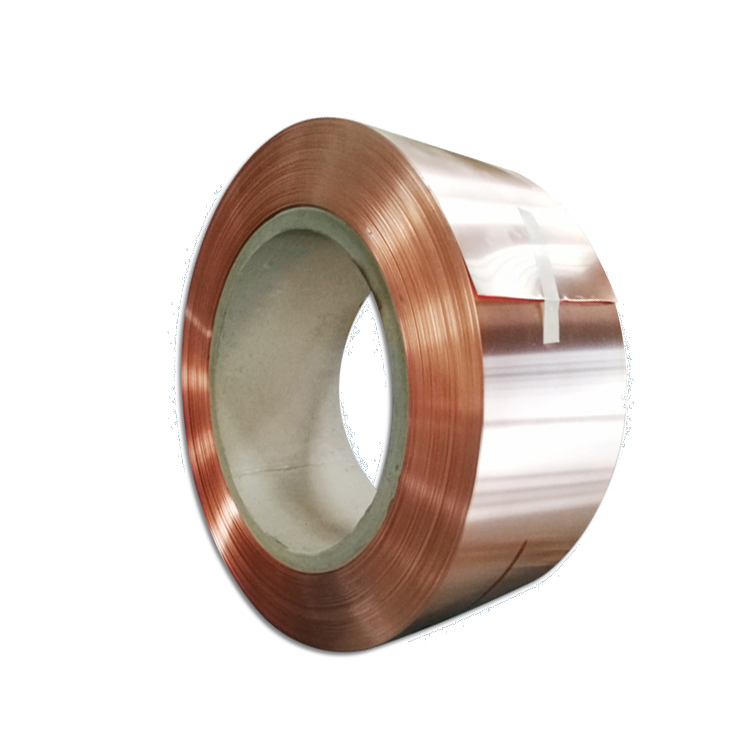
How to Specify and Order C18070 Copper Strip
The earlier articles covered the metallurgy and selection of C18070. This final one is practical: what to put on an enquiry so the quotation is comparable and the strip that arrives is the strip you designed for. An alloy number alone leaves too much...
Jul. 30. 2026 -
Choosing the Right C18070 Temper and Controlling Total Cost
The earlier articles covered what C18070 is, how it performs and where it is used. This one is about specifying it correctly and spending sensibly — where the wrong choice quietly costs money. Start from the bend, then check the strength The mo...
Jul. 30. 2026 -
C18070 Applications: EV Battery Connectors, Photovoltaics, Relays and Fuse Boxes
The previous article set out the numbers behind C18070. This one shows where they are put to work. The common thread is a part that must carry a large current, stay stable when hot, and often be formed into a complex shape — the exact combinati...
Jul. 30. 2026 -
C18070 Properties: Conductivity, Strength, Bendability and Two High-Temperature Behaviours
The first article introduced C18070 as a high-conductivity copper-chromium-silicon-titanium alloy. Its value lies in a balance of properties rather than a single peak, so this article sets them out — and clears up a distinction that causes more...
Jul. 30. 2026 -
What Is C18070 Copper Strip? Composition, Standards and Why Its Conductivity Matters
As vehicles electrify and solar installations scale up, one requirement keeps appearing on connector drawings: carry a large current, stay cool, survive heat over years, and still be formable into a complex shape. Ordinary copper conducts well but is...
Jul. 30. 2026 -
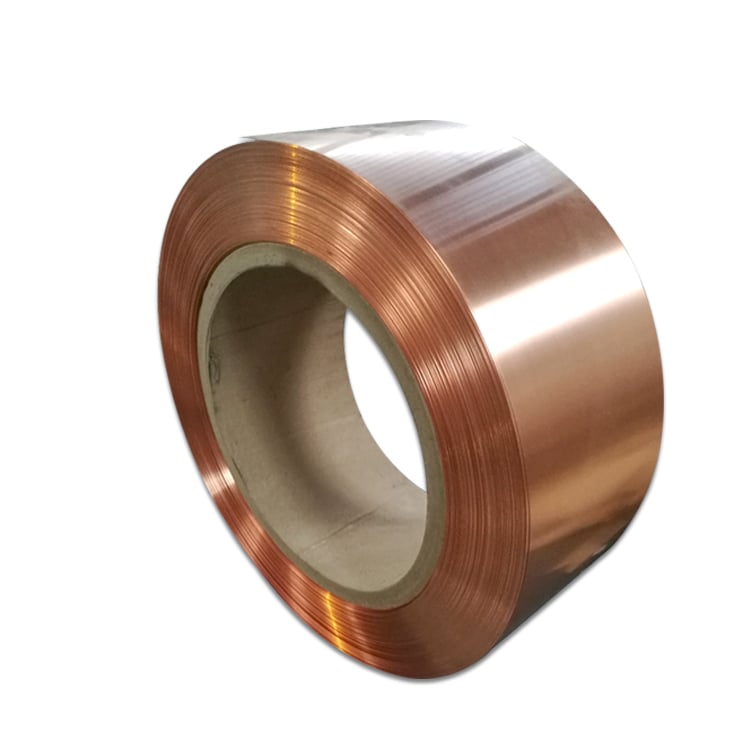
Frequently asked questions
Is C19400 the same as CuFe2P? Yes. CuFe2P (CW107C) is the European designation for the same alloy that UNS lists as C19400 and JIS lists as C1940. Composition limits differ very slightly between standards, so state which specification applies if your...
Jul. 22. 2026 -
What to specify when you enquire
Alloy number alone is not enough to get a comparable quotation. A complete enquiry states temper (O60, H01, H02, H04), thickness and width with tolerance, edge condition, surface finish, coil weight and inner diameter, and the certificate required &...
Jul. 22. 2026 -
Where C19400 is not the right choice
Being clear about the limits usually saves more money than promoting the strengths: Busbars and high-current conductors — if the design needs 90% IACS or better, use C11000 or C10200 instead. High-force springs and long-cycle contacts — ...
Jul. 22. 2026 -
Where it is typically used
Semiconductor lead frames, where formability, plating adhesion and heat dissipation all matter at once Automotive terminals and connector housings, particularly stamped and formed contacts Circuit breaker and relay components Heat sinks, radiator fi...
Jul. 22. 2026 -
What Is C19400 Copper Strip? Composition, Standards and Where It Fits
If you buy copper strip for connectors, terminals or lead frames, you have probably seen C19400 quoted next to plain copper and brass, often at a similar price but with very different data behind it. This article covers what the alloy actually is, ho...
Jul. 22. 2026 -
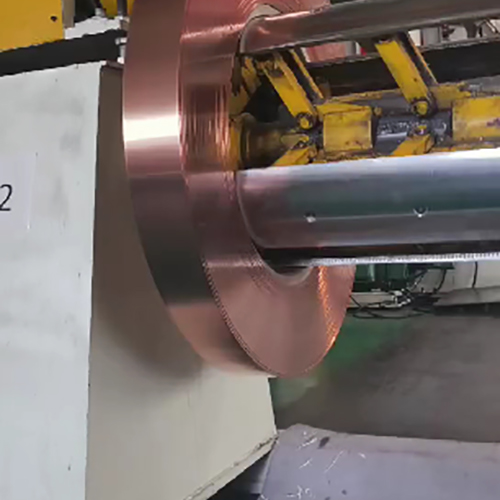
C70600 is a copper nickel alloy material
This grade mainly produces as strip, thick plate, thin plate, rod, tube, etc Nickel content of 9.0-11.0%, also known as B10. C70600 white copper strip, with a main thickness ranging from 0.1-1.0mm, The product has been mass-produced with thin strips ...
Feb. 14. 2025 -

White copper strip
Common grades: C75200, C77000, C7521, C7541, C7701, etc. Common thickness: 0.1-0.3mm Customized thickness: 0.05-5.0mm White copper is with a color like silver made by adding Ni and Zn elements to the copper matrix. It has excellent mechanical propert...
Feb. 12. 2025